Below is a group picture of our speakers and event providers for our July 2015 fundraiser held at the Nussbaum Center For Entrepreneurship in Greensboro, North Carolina.
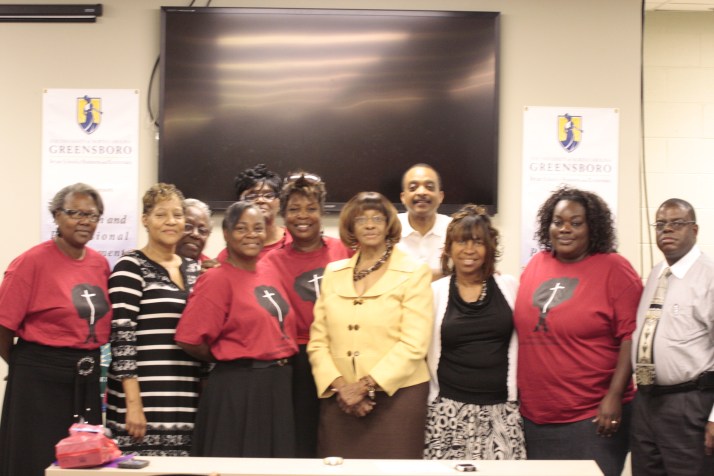
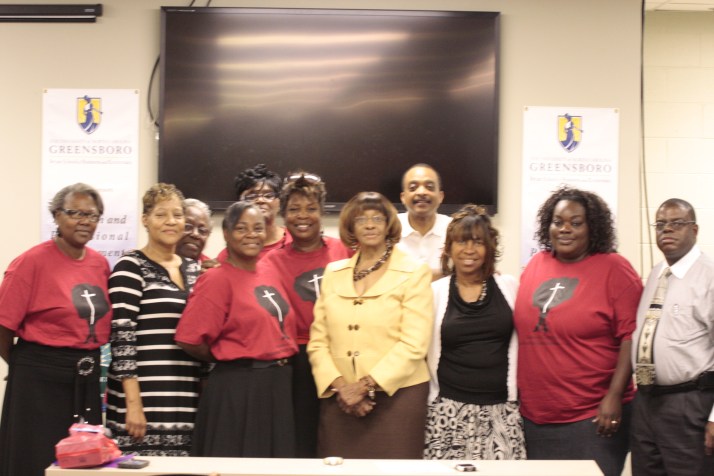
Below is a group picture of our speakers and event providers for our July 2015 fundraiser held at the Nussbaum Center For Entrepreneurship in Greensboro, North Carolina.
Renewal Center May 2016 Newsletter
Please click link below to view our May 2016 newsletter!
Know Your Rights: Title IX
The problem with rape or any sexual assault is that it’s a private yet public concern. Sexual assault and rape in particular is a societal issue that must be dealt with effectively to stop its perpetuation. Rape is a nightmare which refuses to go away, and it can follow you all the days of your life, unless there has been sufficient closure for the victim of the sexual abuse. We can help walk you through the trauma of the abuse, and help you to resolve the nagging problem which often takes the form of post- traumatic stress disorder (PTSD) from a natural and a biblical perspective.
Know Your Rights: Title IX Prohibits Sexual Harassment1 and Sexual Violence Where You Go to School
1 Use of the term “sexual harassment” throughout this document includes sexual violence unless otherwise noted.
Title IX of the Education Amendments of 1972 (“Title IX”), 20 U.S.C. §1681 et seq., is a Federal civil rights law that prohibits discrimination on the basis of sex in education programs and activities. All public and private elementary and secondary schools, school districts, colleges, and universities (hereinafter “schools”) receiving any Federal funds must comply with Title IX. Under Title IX, discrimination on the basis of sex can include sexual harassment or sexual violence, such as rape, sexual assault, sexual battery, and sexual coercion.
Below is additional information regarding the specific requirements of Title IX as they pertain to sexual harassment and sexual violence.
What are a school’s responsibilities to address sexual harassment and sexual violence?
• A school has a responsibility to respond promptly and effectively. If a school knows or reasonably should know about sexual harassment or sexual violence that creates a hostile environment, the school must take immediate action to eliminate the sexual harassment or sexual violence, prevent its recurrence, and address its effects.
• Even if a student or his or her parent does not want to file a complaint or does not request that the school take any action on the student’s behalf, if a school knows or reasonably should know about possible sexual harassment or sexual violence, it must promptly investigate to determine what occurred and then take appropriate steps to resolve the situation.
• A criminal investigation into allegations of sexual harassment or sexual violence does not relieve the school of its duty under Title IX to resolve complaints promptly and equitably.
If you want to learn more about your rights, or if you believe that a school district, college, or university is violating Federal law, you may contact the U.S. Department of Education, Office for Civil Rights, at (800) 421-3481 or ocr@ed.gov. If you wish to fill out a complaint form online, you may do so at: http://www2.ed.gov/about/offices/list/ocr/complaintintro.html.
Abusers Traits
The first recorded instance of abuse was in the bible when Cain killed his brother Abel out of jealousy.
An abuser can be anyone, as evidenced from the Bible. Abusers are in every culture, ethnic group, and nationality in the world, there are both male, and female abusers, but most perpetrators of abuse are male.
“Now Cain said… let’s go out to the field.” And while they were in the field, Cain attacked his brother Abel and killed him.” Genesis 4:8
I’ve found five predominant traits of an abuser. I’m sure there are many more but these five come readily to mind regarding most abusers.
Charismatic
They are charismatic/charming, there’s a certain attractive quality about them. They are extremely polite, and even delightful to be around. One would say “ he’s a charmer” or Mr./Ms. Personality”.
Most often they are physically attractive, although there are some who are not so attractive, but for the most part they are attractive looking, or have some quality about them that’s appealing.
Most people can’t believe that the person is an abuser they can’t see beyond the his/her fascinating personality.
In fact in some instances, children, even though they may actually see the abuse, believe that somehow you the victim was the cause of the abuse, why else would such a sweet person do what he/she does? They miss the whole point of abuse-Power and Control.
We normally look at the outward appearance of a person, but the Lord looks at the heart of a person (I Samuel 16:7).
Jealousy
An abuser can be extremely hateful and jealous of his/her love relationships. Usually they have an unhealthy, unfounded suspicion of their spouse/or friend.
Controlling
Most abusers whether male of female can be controlling in their behavior; they must have the upper hand, dominance, rule in their affairs with their loved ones.
Deceptive
Most abusers can be very deceptive, dishonesty, and full of guile they somehow manage to juggle situations, people and circumstances to their benefit. They are convincing impostors.
A Proud Heart
Most abusers are proud, arrogant, and egotistical they have an unrepentant spirit about abuse, and most things. They believe what they have done was to keep things in control for your good. They may cry, and plead even ask for your forgiveness, but it is not sincere, for soon the slander and abuse starts all over again.
Here of Some Characteristics of Abusers
They men/women may track you and your whereabouts-mileage, phone calls, social media, etc.
They may try to control your money. If they are the chief bread winner they keep the money
When angry destroys property
Threaten you
Physical abusive
Emotionally abusive
Psychological abusive
Blames you for his outbursts
May have a poor self-image
May have a history of family violence
Verbally abusive
May be unfaithful in marital relationship
May have alcohol/drug addiction
May have gambling addiction
Most abusers like to rush into a relationship
Humiliates you
Dr. Jekyll Mr. Hyde syndrome
If you have found some of these traits or characteristics constantly being displayed in your relationship it’s time to get help as soon as possible.
Spiritually: First of all pray and ask the Lord to show you how to handle the situation that you’re currently in. Ask the Lord to give you divine strategies in the situation.
Naturally: If your significant other is physically violent take tangible steps to get help as soon as possible, and remove yourself from harms way. Remember faith without doing something to help yourself is useless.
If the situation is violent, and children are involved Please call for Emergency Help 911; National Domestic Violence Hotline 1 800 799-7233 (SAFE) 1 800 787-3224 (TDD)
“My people are destroyed from lack of knowledge.” Hosea 4:6
Whether you exercise your rights, or not, knowing victims rights in the midst of domestic violence will empower you. Your rights give you options. In the United States of America whether you are a citizen, a legally resident, or staying illegally… you have legal rights.
If you don’t know your rights most often abusers will try to take away as many of your rights as possible through fear, intimidation, and/or abuse. Your abuser’s actions do not change the fact that legally you have rights.
KNOW THE LAW FOR DOMESTIC VIOLENCE
You have the right to religious freedom
You have the right to equal protection of the law, whether you are legally, or illegally in this country.
You have the right to come and go within the United States of America whenever you please.
You have the right to see and talk to whomever you want, whenever you want to.
You have the right to express yourself freely.
You have the right to further your education if you want to.
You have the right to work and choose your career as long as you are a citizen, or have a worker’s visa.
You have the right to your earned wages and to spend them as you prefer.
You have the right to refuse sex when you don’t want it.
You have the right to have sex when you want and with whomever you want, as long as the other person agrees.
You have the right to choose if, and when you have children, and how many.
You have the right to take your children and hide with them from you abuser, even if your abuser is the other biological parent. Make sure you verify this with your State of residence. You have the right to live your life without violence.
For further information on your rights, I highly recommend http://www.justicewomen.com Know the Law for Domestic Violence in your State. See http://hotline.Women’s Law.org And www. LawHelp.org/NC
Definition of Domestic Violence
Domestic violence and emotional abuse are behaviors used by one person in a relationship to control the other. Partners may be married or not married; heterosexual, gay, or lesbian; living together, separated or dating.
Examples of abuse include:
name-calling or putdowns
keeping a partner from contacting their family or friends
withholding money
stopping a partner from getting or keeping a job
actual or threatened physical harm
sexual assault
stalking
intimidation
Violence can be criminal and includes physical assault (hitting, pushing, shoving, etc.), sexual abuse (unwanted or forced sexual activity), and stalking. Although emotional, psychological and financial abuse are not criminal behaviors, they are forms of abuse and can lead to criminal violence
Intimate Partner Violence: Definitions
Intimate partner violence (IPV) is a serious, preventable public health problem that affects millions of Americans. The term “intimate partner violence” describes physical, sexual, or psychological harm by a current or former partner or spouse. This type of violence can occur among heterosexual or same-sex couples and does not require sexual intimacy.
IPV can vary in frequency and severity. It occurs on a continuum, ranging from one hit that may or may not impact the victim to chronic, severe battering.
There are four main types of intimate partner violence
Physical violence, Sexual violence, Threats physical/sexual violence, and Psychological/emotional (Saltzman et al. 2002).


 renewal.center